IIT Madras successfully implements drinking water, sustainable waste management project in Vallipuram, TN
BusinessManasi Praharaj28 Oct 2026
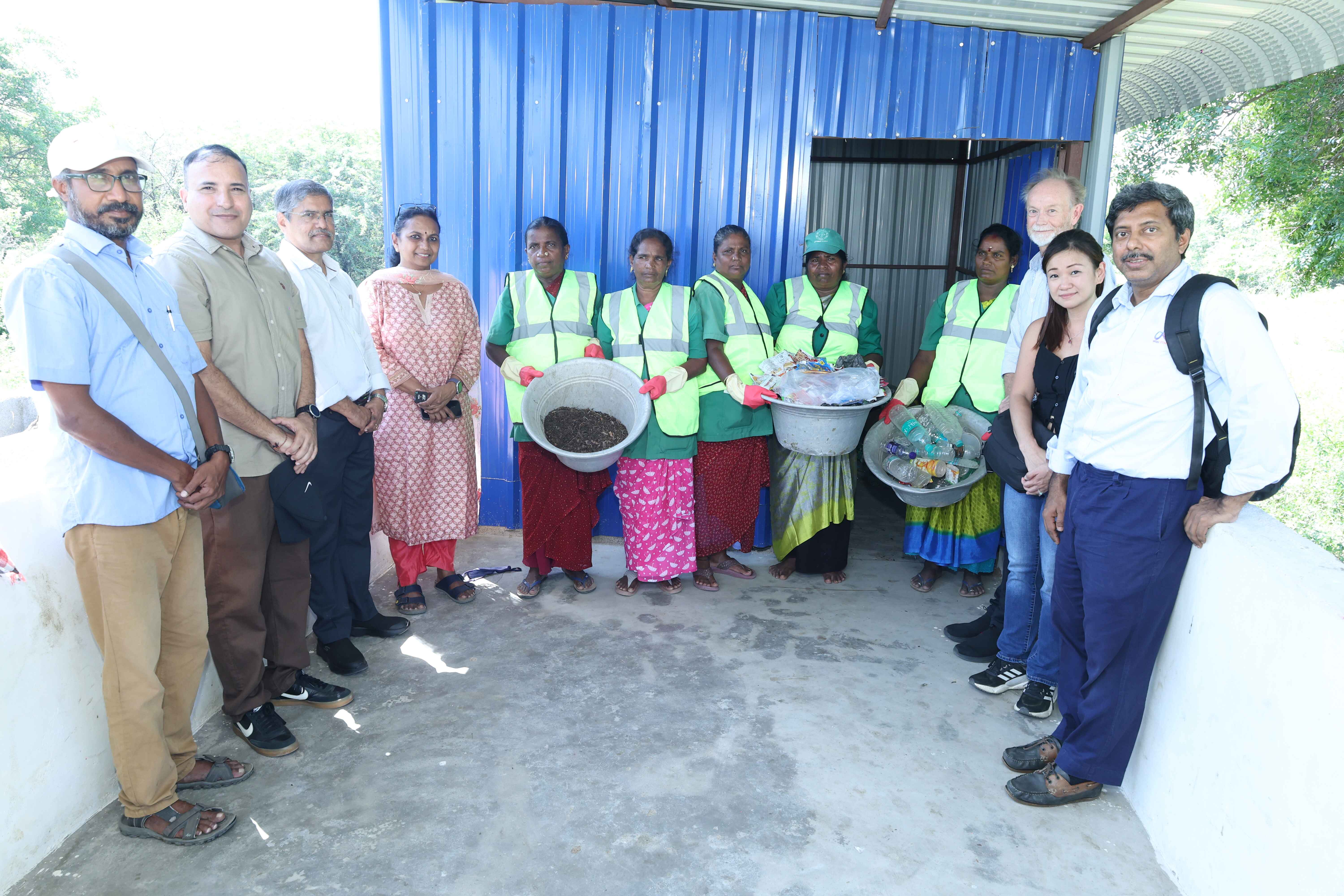
Chennai, 28 October 2026: Indian Institute of Technology Madras (IIT Madras) has successfully executed a water treatment and solid waste management project in the Vallipuram Village Panchayat of Chengalpattu district Tamil Nadu.
The project was taken up under ‘Clean and Healthy Village Development Programme’ of AquaMAP, a Centre for Water Management and Policy at IIT Madras, to improve health, hygiene and environmental sustainability. Lien Environmental Fellowship of the Lien Foundation, Singapore, provided funding support through Nanyang Technological University (NTU) Singapore.
The programme directly helped more than 350 people through work at the schools and the Primary Health Centre (PHC). The village has 2,000 residents in four hamlets and six wards. The PHC also serves residents from 14 villages extending the reach of the drinking‑water intervention.
The handover ceremony was held in Vallipuram today (28th Oct 2026). It brought together funding partners, government officials from Chengalpattu district, Panchayat representatives and many others.
Prof. Ligy Philip and Prof. B. S. Murty of AquaMAP Centre IIT Madras coordinated the project. It created a model that can be replicated across the State and the country for IOT based water supply system, safe drinking water and sustainable solid waste management. It uses technology, community engagement and capacity building.
Addressing the handover ceremony Prof. Ligy Philip, Coordinator of AquaMAP Centre IIT Madras said, “Access to safe drinking water and a clean, hygienic environment is fundamental to healthy living; through the Lien Foundation Environmental Fellowship, in collaboration with Nanyang Technological University, Singapore, AquaMAP at IIT Madras is proud to have helped provide these essential services to the students and villagers of Vallipuram Panchayat. We gratefully acknowledge the support of the Lien Foundation, NTU Singapore, IIT Madras, government officials, the elected Panchayat body and the local community. We believe that this collaborative model has immense potential for replication across Tamil Nadu and the rest of India.”
‘COMMUNITY STAKEBOLDERS’
Speaking on the occasion, Mrs. Sobiya Amul Parthasarathy, President, Vallipuram Panchayat, said, “IIT Madras has transformed our village through safe drinking water for our children, effective waste management, and smart monitoring of water quality, inspiring our community towards a cleaner, healthier and more sustainable future. The difference before and after their intervention is remarkable, and we are deeply grateful for their continued support in empowering our village and setting an example for many others to follow.”
Further, Ms. Geetha B., Headmistress (H.M.), Government High School, Vallipuram, Chengalpattu District, said, “AquaMAP has made a lasting difference to our school by providing safe drinking water, promoting hand hygiene and waste management, and inspiring our children to take an active role in keeping their school and homes clean. Their continued technical support and engaging educational activities are nurturing healthier habits, environmental responsibility and a spirit of community service that will benefit our children and future generations.”
The programme was carried out jointly with stakeholders of Vallipuram Panchayat, schools, the Primary Health Centre, Tamil Nadu Government officials and other organisations. The project combined infrastructure building, water quality monitoring, regular maintenance, environmental awareness and community participation.
DECENTRALISED WATER TREATMENT
The project established three drinking‑water treatment facilities at the local Government Primary School, Government High School and the PHC in Vallipuram. The two schools use ultrafiltration and ultraviolet systems. The PHC uses an osmosis (RO) system and UV. To improve water quality checks IoT‑enabled sensors were installed on five water tanks and the treatment systems. The sensors track water flow, pH, turbidity and total dissolved solids (TDS). Data goes to an app for remote monitoring. Regular lab tests and sensor calibration support the system.
The initiative gave institutions easier access to treated drinking water. It also showed how decentralised treatment and technology monitoring can help water management.
SUSTAINABLE SOLID WASTE MANAGEMENT
The project tackled waste problems by collecting household waste building recycling infrastructure and running community awareness programs.
A battery‑powered vehicle was given for waste collection and transport. A solid waste facility was built to recover inorganic waste and to support organic waste through composting. Awareness campaigns urged residents to separate waste at home cut plastic use and stop burning waste.
School and community outreach also taught handwashing, cleaning water bottles, safe drinking‑water habits and proper waste disposal. Capacity‑building programs with youth, women and community members aimed to keep people involved in keeping the village clean and healthy.
IMPACT ASSESSMENT
The final impact assessment showed that every surveyed school student and PHC visitor used the treated water. They were happy with its quality and taste. Having treated water at school also meant students no longer had to bring water from home.
The assessment also found that 78.3 percent of surveyed community members said they separate household waste. As many as 83.33 percent said they do not burn non‑biodegradable plastic. Awareness campaigns and the encouragement from sanitation workers were key to waste separation.
A clear example of community involvement is when school students collected 300 kg of non‑biodegradable waste in just two days. This shows how school‑led actions can boost responsibility and change household habits.
After the handover the Panchayat will play a role in keeping the facilities working and in making sure they are used. Regular maintenance of the treatment systems, water quality checks, sensor calibration and ongoing community engagement are essential to keep the benefits of this initiative alive.
